
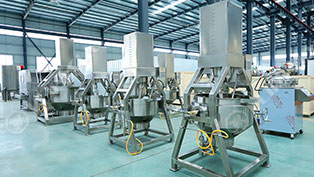
In the food processing industry, the steamed jacketed kettle is a critical piece of heating and mixing equipment, widely used in the production of sauces, soup bases, syrups, fillings, and various viscous materials. Choosing the right equipment not only affects product quality but also directly impacts production efficiency and operational stability.
Identify Production Requirements and Material Characteristics
Before selecting a model, you must first clarify your production type. Different materials have varying heating methods and mixing requirements; for example, high-viscosity sauces require more vigorous mixing, while liquid soup bases prioritize uniform heating.
A steamed jacketed kettle employs a double-walled steam heating structure, where heat is uniformly conducted through the jacket to the interior of the kettle, effectively preventing localized overheating or scorching at the bottom. This is crucial for maintaining product consistency.
Focus on Heating Methods and Temperature Control Precision
Stable temperature control is key to ensuring product quality. High-quality equipment typically regulates temperature through steam pressure adjustment, maintaining a consistent heating environment inside the kettle.
When selecting equipment, prioritize models with precise temperature control systems, as excessive temperature fluctuations can lead to issues such as sauce separation or uneven syrup crystallization. Equipment like that provided by Lonkia typically features a more stable steam-heating design, which enhances overall production consistency.
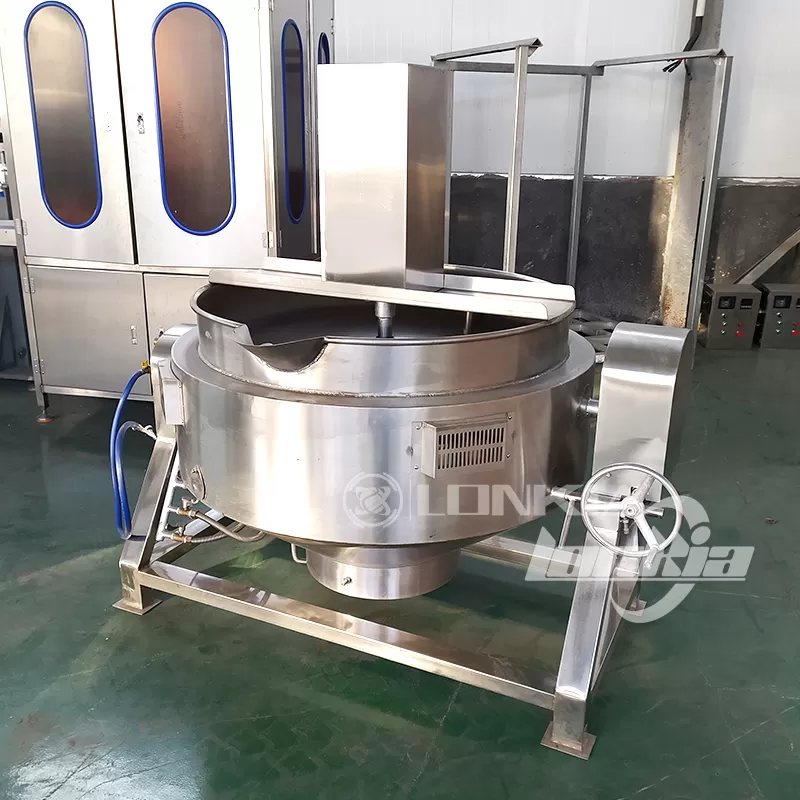
Check Whether the Agitation System Is Suitable for the Product
For facilities processing materials that require mixing or are highly viscous, the agitation system is particularly critical. A steamed jacketed kettle equipped with an agitator can continuously scrape the bottom and turn the material, preventing sedimentation and sticking to the kettle walls.
If the production process involves sauces or paste-like products, prioritize models with reinforced agitation structures to reduce manual intervention and improve continuous production capacity.
Materials and Hygienic Design Are Essential
Food processing equipment must comply with hygiene standards. Food-grade stainless steel construction is generally recommended, as it is not only corrosion-resistant but also easy to clean.
At the same time, the interior of the equipment should be designed to minimize dead corners, thereby reducing the risk of residue buildup, improving cleaning efficiency, and ensuring long-term, stable operation.
Structural Design and Discharge Method Selection
Different factories have varying requirements for discharge methods. Some production lines are better suited for a tilt-out design, while others are better suited for a bottom-discharge design.
When making a selection, consider operational convenience and production pace to avoid compromising overall line efficiency due to poor discharge. A well-designed structure can significantly reduce labor costs.
Summary: Choosing a Reliable Equipment Supplier Is Paramount
Selecting the right steamed jacketed kettle is not merely about choosing a piece of equipment; it lays the foundation for establishing stable production capacity at the factory. The equipment’s stability, heating efficiency, and mixing performance all directly impact the quality of the final product.
Specialized food machinery manufacturers like Lonkia can provide comprehensive solutions better tailored to industrial production needs, helping factories achieve more efficient and stable production processes.