
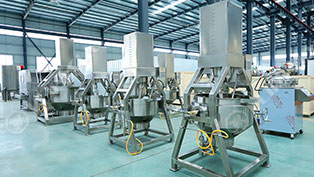
When it comes to selecting the right jacketed kettle pot for your food processing operation, understanding the differences between available types is key to maximizing both performance and return on investment. Jacketed kettle pots are essential tools in commercial kitchens and industrial food plants, used for cooking, mixing, heating, and even cooling a variety of food products with efficiency and precision.
1. What Is a Jacketed Kettle Pot?
A jacketed kettle pot consists of a double-walled cooking vessel that allows steam, water, or oil to circulate between the inner and outer walls (jacket). This design provides uniform heating or cooling, reduces burning or sticking, and supports high-capacity batch production. It is widely used for making sauces, soups, jams, dairy products, and other viscous or delicate foods.
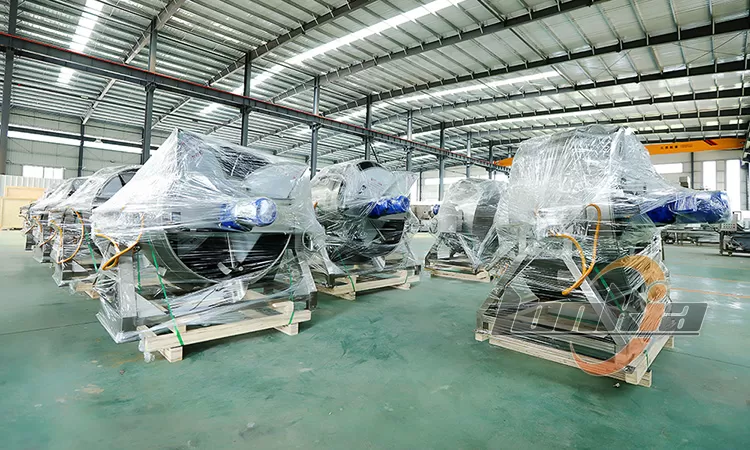
2. Types of Jacketed Kettle Pots
a. Stationary Jacketed Kettle Pots
Best for: Fixed-position cooking with high volume.
Advantages: Durable and ideal for long boiling, slow cooking, or large batches.
Limitations: Not easy to pour or transfer product; typically requires pump or ladle for unloading.
b. Tilting Jacketed Kettle Pots
Best for: Flexible food discharge and easier cleaning.
Advantages: The kettle can tilt, allowing easy product outflow without extra machinery.
Limitations: Usually smaller in size; requires manual control.
c. Steam-Jacketed Kettle Pots
Best for: Consistent, high-temperature cooking with minimal energy waste.
Advantages: Uses pressurized steam for quick and even heating.
Limitations: Needs connection to a steam source or built-in boiler.
d. Electric Jacketed Kettle Pots
Best for: Kitchens or facilities without steam utilities.
Advantages: Plug-and-play functionality; easy to control and install.
Limitations: Generally slower heating than steam versions.
e. Gas-Fired Jacketed Kettle Pots
Best for: Remote or large-scale food production.
Advantages: High heating speed and cost-effective energy use.
Limitations: Ventilation required; not ideal for small kitchens.
3. Key Factors to Consider
Batch size: Match the kettle size (e.g., 100L, 300L, 500L) to your daily output.
Product viscosity: Thicker products may require agitators or scrapers.
Control type: Manual vs. automatic temperature and mixing controls.
Mobility: Some kettles include wheels or are built into movable frames.
4. Which One Should You Choose?
If you run a small-scale catering business, an electric tilting kettle offers simplicity and versatility. For medium-sized sauce production, a steam-jacketed, fixed kettle with mixer ensures consistency. For high-volume processing plants, an automated gas or steam-powered kettle with full PLC controls might be the most efficient investment.
Final Thoughts
Choosing the right jacketed kettle pot depends on your product type, processing volume, facility infrastructure, and budget. At LONKIA Machinery, we provide a wide range of jacketed kettles tailored to meet the diverse needs of food businesses. Contact us to find the perfect solution for your production line.