
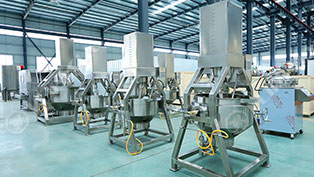
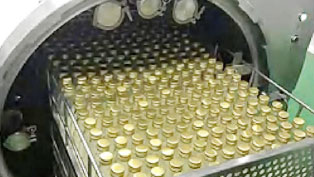
In commercial food production, achieving consistent quality, hygiene, and efficiency is non-negotiable—especially when it comes to sauces, soups, and stews. One piece of equipment that plays a vital role in this process is the jacketed kettle pot. Known for its precise temperature control and large-batch capacity, this machine has become a staple in industrial kitchens and food factories worldwide.
1. What Is a Jacketed Kettle Pot?
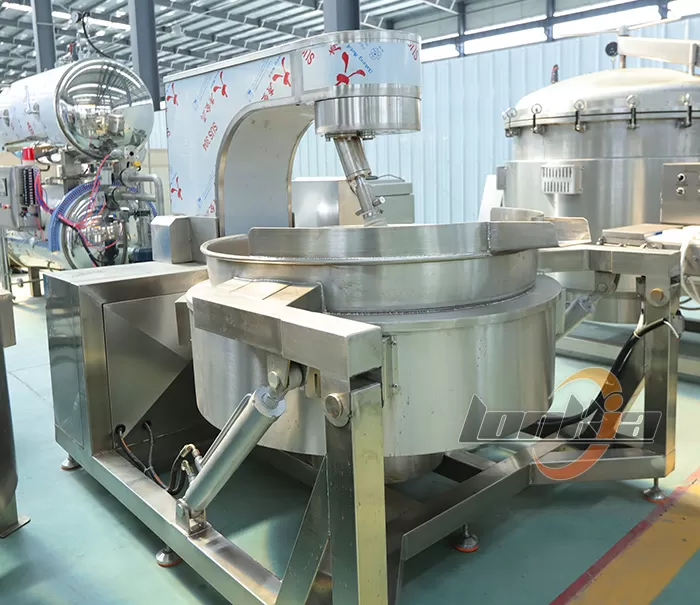
A jacketed kettle is a type of cooking vessel with a double-walled design. The space between the inner and outer layers—called the "jacket"—is filled with steam, hot water, or thermal oil to heat the contents indirectly.
This allows for:
Even and gentle heating, preventing burning or scorching
Accurate temperature control for sensitive recipes
Large batch processing with minimal supervision
These features make it ideal for cooking thick, viscous materials like:
Tomato sauce
Cheese sauce
Meat stew
Chili
Cream-based soups
Fruit jams
2. Why Is It Essential in Sauce and Soup Production?
✅ Even Heating for Consistency
Traditional pots may create hot spots, especially with thick sauces. The indirect heating in a jacketed kettle ensures that every part of the mixture cooks at the same rate.
✅ Improved Food Safety
Many models are made from food-grade stainless steel (SS304 or SS316), and their enclosed systems help maintain hygiene standards required for commercial food processing.
✅ Reduced Labor Costs
With automatic mixing and tilting functions, fewer operators are needed. The machine stirs, heats, and even discharges the product with minimal manual handling.
✅ Versatility
Jacketed kettles can handle a wide range of viscosities and ingredients. Some come with variable-speed mixers to accommodate both chunky stews and smooth purees.
3. Key Features to Look For
| Feature | Description |
|---|---|
| Capacity | Common sizes range from 50L to 500L+ |
| Heating source | Steam, gas, electric, or thermal oil |
| Mixing options | With or without agitator |
| Tilting mechanism | Manual or hydraulic |
| Temperature control | Digital or analog settings |
| Material | SS304/316 for food safety |
🔍 Tip: For thick sauces, choose a model with a scraper agitator to prevent sticking.
4. Common Applications in Food Production
Sauce Factories: Marinara, curry sauce, Alfredo, cheese sauce
Soup Manufacturers: Chicken soup, mushroom cream, lentil stew
Ready Meal Producers: Base gravies, chili, stew mixtures
Catering Kitchens: Large batch cooking for events or meal prep
5. Final Thoughts
In the fast-paced world of commercial food processing, a jacketed kettle pot isn't just convenient—it's critical. From ensuring the uniform texture of a tomato basil soup to preventing the scorching of béchamel, this machine brings both precision and productivity to your production line.
Whether you’re a small sauce startup or a large-scale soup manufacturer, investing in a high-quality jacketed kettle will streamline your workflow, enhance product consistency, and reduce waste—helping your business grow sustainably.