

In food processing, bottle steam sterilizers are widely used in the production of juices, sauces, and beverages. However, many customers encounter a critical issue during actual use: bottle bursting or deformation. This not only affects product quality but also increases production waste. This article will systematically analyze how to effectively prevent this problem from the perspectives of equipment principles and practical operation.
What Are the Core Causes of Bottle Bursting?
Bottle breakage during the steam sterilization process is typically not caused by a single factor but rather by the combined effect of the following key factors:
1. Rapid Temperature Changes
During sterilization, the steam sterilizer machine typically raises the temperature to approximately 121°C to kill pathogens. If the temperature rises or falls too quickly, thermal shock can occur, causing the glass bottles to shatter.
2. Imbalance Between Internal and External Pressure
Internal pressure increases as the temperature rises. If external pressure control is inadequate, bottle caps may be forced open or the bottles may even burst.
3. Uneven Heating
If the temperature distribution within the sterilization chamber is uneven, it can lead to overheating in certain areas, causing localized stress concentration and resulting in breakage.
How Equipment Can Reduce the Risk of Bottle Bursting?
High-quality bottle steam sterilizers are designed with these issues in mind.
1. Uniform Heating System
The equipment uses steam circulation or spray systems to create convection within the chamber, ensuring uniform temperature distribution and preventing localized overheating.
2. Rotating Structure Design
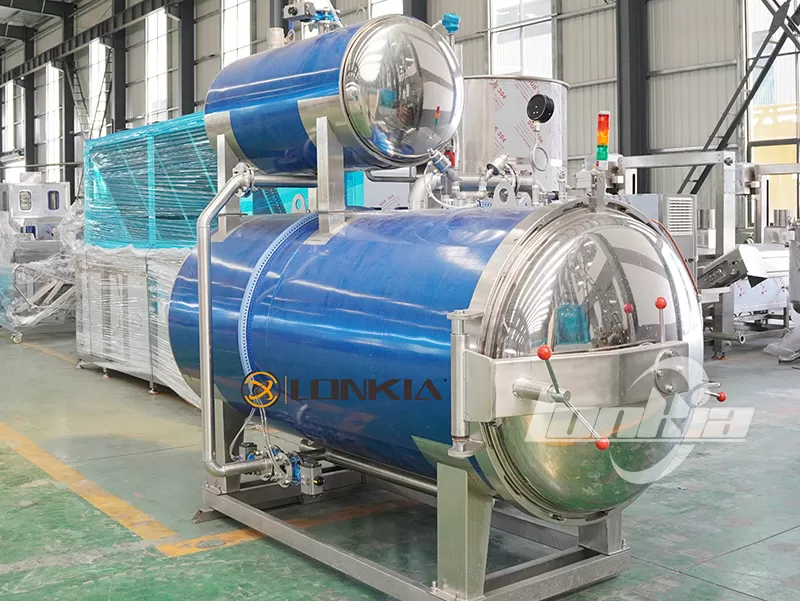
Taking the Lonkia bottle sterilizer as an example, its rotating cage structure continuously tumbles the products during sterilization, ensuring more uniform heat coverage and thereby reducing uneven stress on the bottles.
3. Precise Pressure Control System
Compressed air is used to generate back pressure, balancing the pressure inside and outside the bottles in real time to prevent lids from popping off or containers from deforming.
Key Points to Note During Actual Operation
Even with high-performance steam sterilizer machine, improper operation can still lead to bottle explosions. The following points are particularly critical:
- Control the Heating and Cooling Curves: It is recommended to use a staged heating and slow cooling method to avoid thermal shock caused by excessive temperature differences.
- Set Backpressure Parameters Appropriately: Different bottle types (glass, PET) require different pressure settings, which should be adjusted based on product characteristics.
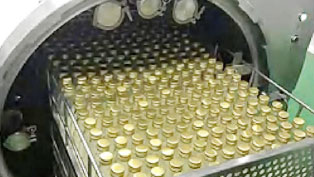
- Load Products Correctly: Avoid stacking bottles too densely to ensure steam can fully contact each container.
- Select Appropriate Packaging: Bottle quality, thickness, and heat resistance directly affect sterilization stability.
The Importance of Selecting the Right Bottle Steam Sterilizer
From the customer's perspective, reducing bottle breakage is not only a technical issue but also a matter of cost control. A stable steam sterilizer machine can deliver:
- Lower scrap rates
- More consistent product quality
- Higher production continuity
In its equipment design, lonkia emphasizes the combination of temperature uniformity and pressure control, which significantly reduces the risk of bottle breakage while ensuring sterilization effectiveness, helping customers achieve stable production.
Conclusion
The issue of bottle breakage is fundamentally the result of an imbalance among temperature, pressure, and structural factors. By selecting the right equipment and combining it with scientifically optimized operating parameters, this problem can be effectively avoided.
For food processing companies, paying attention to equipment details not only enhances safety but also directly improves production efficiency. This is the core reason why an increasing number of companies are placing greater emphasis on high-performance bottle steam sterilizers.