
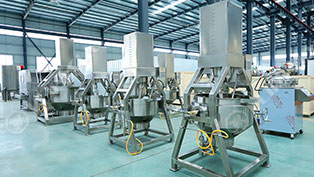
In large-scale food processing, efficiency, consistency, and food safety are key factors for success. One piece of equipment that plays a vital role in achieving these goals is the jacketed kettle. Widely used in commercial kitchens and industrial food plants, jacketed kettles are designed for cooking, mixing, and heating large volumes of food with precision.
This article explores the main benefits of using jacketed kettles in large-scale food production and why they are a smart investment for food manufacturers.
What Is a Jacketed Kettle?
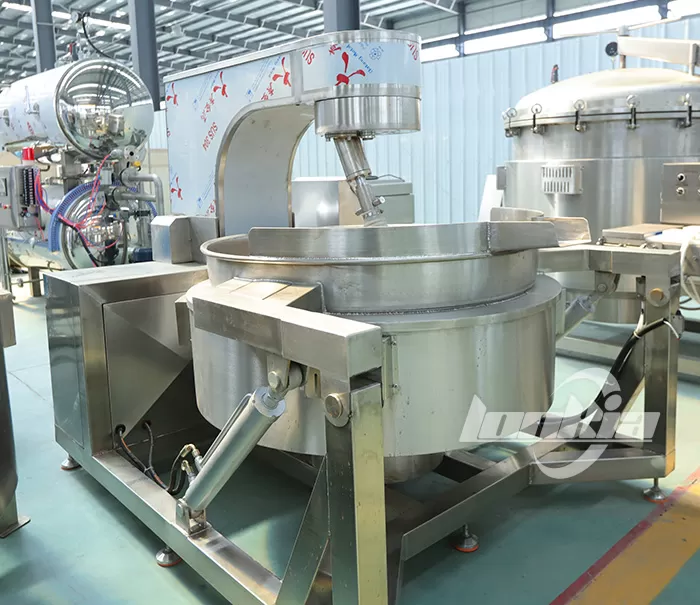
A jacketed kettle is a large, stainless steel vessel with an outer layer (jacket) that allows steam, hot water, or thermal oil to circulate around the inner chamber. This indirect heating method provides even heat distribution, preventing scorching or burning. Many models also include agitators for continuous stirring, making them suitable for thick or delicate recipes.
Key Benefits of Jacketed Kettles
1. Uniform and Gentle Heating
Unlike direct heating methods, jacketed kettles use indirect heat to ensure that food is cooked evenly. This prevents hot spots, reduces the risk of burning, and improves the consistency of sauces, soups, jams, and dairy products.
2. Energy Efficiency
The double-wall jacket allows efficient heat transfer, which means less energy is wasted compared to traditional cooking methods. Some advanced models are designed with insulation and automated controls to reduce energy costs further.
3. Large Capacity for Bulk Production
Jacketed kettles are available in a wide range of sizes—from 50 liters to several thousand liters. This makes them ideal for large-scale food processing where consistent batch production is required.
4. Improved Food Safety and Hygiene
Made of high-grade stainless steel, jacketed kettles meet strict hygiene standards. Their smooth surfaces are easy to clean, and some models feature tilting or bottom-discharge valves for quick product removal and cleaning.
5. Versatility in Applications
From sauces, gravies, and soups to confectionery, dairy, and ready-to-eat meals, jacketed kettles can handle a wide variety of food products. Agitator-equipped models are especially useful for high-viscosity foods like caramel, mashed potatoes, or cheese.
6. Labor and Time Savings
With automation features like temperature control, agitation, and tilting discharge, operators can reduce manual labor and improve production efficiency. This frees workers for other tasks and reduces the risk of workplace injuries from heavy manual stirring.
Jacketed Kettle Applications in Food Processing
Sauces & Soups: Consistent heating and mixing for smooth textures.
Confectionery: Ideal for caramel, chocolate, and syrups.
Dairy Products: Milk, custards, and cheese sauces with reduced risk of burning.
Fruit & Jam Production: Gentle heating preserves flavor and color.
Ready-to-Eat Meals: Large-batch preparation with uniform quality.
Why Food Manufacturers Choose Jacketed Kettles
Food processors face constant pressure to increase output while maintaining high standards. Jacketed kettles solve many challenges by offering:
Consistent quality across batches
Reduced production costs through energy savings
Compliance with hygiene standards
Scalability for expanding businesses
Conclusion
For large-scale food processing, a jacketed kettle is more than just a cooking vessel—it’s a productivity booster, a quality enhancer, and a cost-saving tool. Whether you are producing soups, sauces, confectionery, or ready meals, investing in a jacketed kettle ensures efficiency, consistency, and food safety at scale.
👉 If you’re planning to upgrade your production line, a jacketed kettle is one of the smartest investments you can make.