
In commercial kitchens and industrial food processing plants, consistent heating and precise temperature control are critical. One piece of equipment designed specifically to meet these needs is the steam jacketed pot. But what exactly is a steam jacketed pot, and how does it work?
This article explains the working principle, advantages, and common applications of steam jacketed pots, helping you understand why they are widely used in large-scale food production.
What Is a Steam Jacketed Pot?
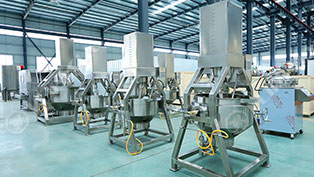
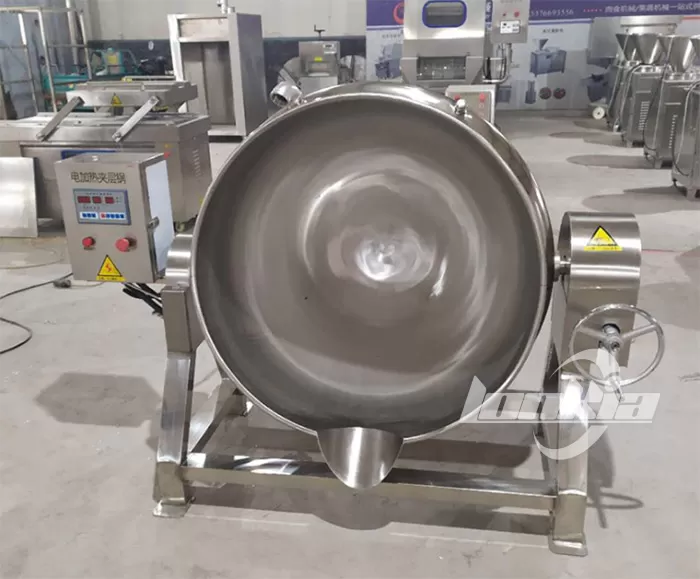
A steam jacketed pot (also called a steam jacketed kettle) is a cooking vessel with a double-wall structure. The space between the inner and outer walls—known as the jacket—is filled with steam supplied from a boiler.
Instead of direct heat, steam transfers thermal energy through the vessel walls, gently and evenly heating the food inside. This indirect heating method reduces the risk of scorching and ensures uniform cooking.
Steam jacketed pots are commonly used for:
Soups and broths
Sauces and gravies
Jams and preserves
Dairy products
Ready-to-eat meals
How Does a Steam Jacketed Pot Work?
The working process of a steam jacketed pot can be broken down into a few simple steps:
1. Steam Generation
Steam is produced by an external steam boiler and delivered to the jacket surrounding the pot.
2. Heat Transfer
As steam enters the jacket, it transfers heat to the inner wall of the pot. The steam condenses into water as it releases thermal energy.
3. Even Cooking
The heat spreads evenly across the pot surface, cooking the food uniformly without hotspots.
4. Temperature Control
Operators can regulate steam pressure and flow, allowing precise control over cooking temperature.
5. Condensate Discharge
Condensed steam (water) is discharged through a drain system, maintaining efficient heat transfer.
Key Advantages of Steam Jacketed Pots
Uniform Heating
Steam provides consistent heat distribution, making it ideal for thick or delicate products that can burn easily.
Precise Temperature Control
Steam pressure allows fine adjustments, which is critical for products requiring strict cooking parameters.
Reduced Risk of Scorching
Indirect heating minimizes product sticking or burning, even during long cooking cycles.
High Energy Efficiency
Steam transfers heat more efficiently than direct flame, especially in continuous or large-batch operations.
Scalable for Industrial Use
Steam jacketed pots are available in a wide range of capacities, from small commercial kitchens to large food factories.
Steam Jacketed Pot vs. Direct-Heat Cooking
Compared with traditional direct-flame pots, steam jacketed pots offer several improvements:
Better product consistency
Improved food safety
Easier cleaning and maintenance
Longer equipment lifespan
Greater suitability for automation
These advantages make steam jacketed pots a preferred choice for professional food processors.
Common Applications in Food Processing
Steam jacketed pots are widely used in:
Central kitchens and catering facilities
Sauce and soup production lines
Fruit and vegetable processing
Meat and poultry processing
Dairy and confectionery manufacturing
They can also be integrated with mixers, agitators, or automated discharge systems for higher efficiency.
How to Choose the Right Steam Jacketed Pot
When selecting a steam jacketed pot, consider:
Required capacity (liters or gallons)
Steam pressure availability
Material (food-grade stainless steel)
Manual or automatic controls
Optional agitators or tilting mechanisms
Choosing the right configuration ensures optimal performance and long-term reliability.
Conclusion
A steam jacketed pot is an essential piece of equipment for professional food production, offering uniform heating, precise temperature control, and excellent product consistency. By using steam as an indirect heat source, it helps improve cooking efficiency while reducing quality risks.
Understanding how a steam jacketed pot works allows food processors and commercial kitchens to make informed decisions when upgrading or expanding their cooking systems.