

In food processing, selecting the appropriate steam autoclave sterilizer is not only critical for sterilization effectiveness but also directly impacts packaging integrity, product quality, and production stability. Different packaging structures have distinct requirements for temperature, pressure, and heat transfer methods; therefore, selection must be based on the specific characteristics of the equipment.
Core Principles of Steam Autoclave Sterilizer
High-pressure steam autoclave sterilizer introduces high-temperature steam into a sealed pressure vessel, raising the temperature to 110–135°C and maintaining it for a specific duration to kill microorganisms and achieve commercial sterility.
In this process, temperature uniformity and pressure control capabilities are key factors determining the equipment's suitability:
- Temperature inconsistency → Incomplete sterilization
- Pressure imbalance → Package deformation or rupture
Therefore, selecting the appropriate system structure for different packaging types is particularly important.
Key Considerations for Retort Pouch Equipment Selection
Flexible packaging (such as aluminum-plastic composite pouches) offers advantages such as rapid heat conduction and light weight, making it one of the most widely used forms today.
Key Issues:
- Prone to expansion and bulging
- Seals are susceptible to pressure damage
Equipment Selection Recommendations:
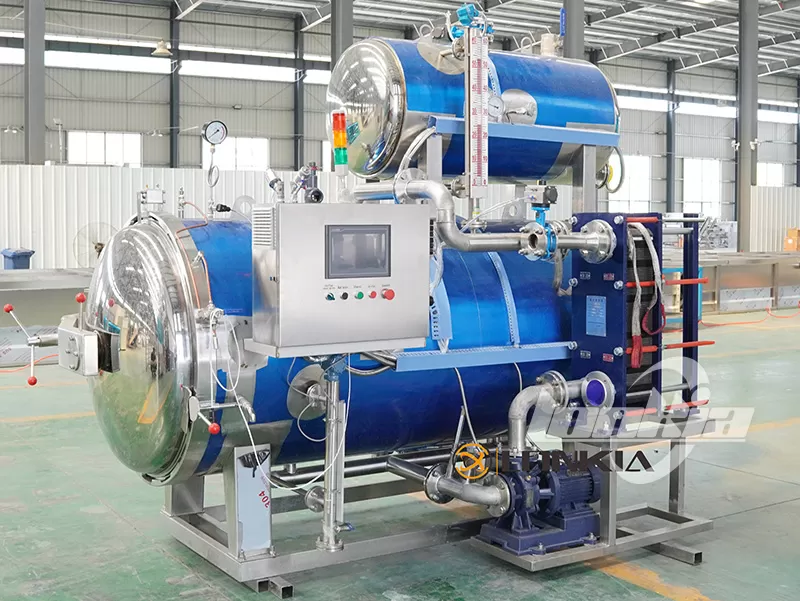
- Prioritize steam + water spray-type steam autoclave sterilizers
- Equipped with a backpressure control system (compressed air pressure regulation)
- Ensure gradual temperature rise and cooling processes
👉 Reason: The spray system creates a uniform heat exchange environment through circulating water, while precisely controlling pressure to prevent damage to flexible packaging.
Equipment Matching Strategies for Glass Bottle Packaging
Glass bottles are rigid containers but are extremely sensitive to temperature fluctuations.
Common Issues:
- Bottle bursting
- Cracks
- Seal failure
Equipment Requirements:
- Precise pressure compensation system
- Staged heating and cooling
- Stable temperature distribution
👉 Key Point: Rapid pressure drop must be avoided, as it can cause excessive internal-external pressure differentials leading to breakage.
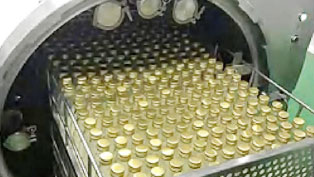
In practical applications, steam steriliser autoclave like Lonkia's, through multi-stage temperature control and pressure regulation, can effectively reduce the risk of glass bottle breakage and improve production stability.
Solutions for Canned Food
Metal cans offer high-pressure resistance and are the most traditional and stable form of packaging.
Characteristics:
- High pressure resistance
- Low temperature sensitivity
Recommended Equipment:
- Traditional pure steam autoclave sterilizer
👉 Reason:
Steam has extremely high heat transfer efficiency, enabling rapid attainment of sterilization temperatures, making it suitable for high-volume production.
However, the following must still be noted:
- Thorough venting (to avoid cold spots)
- Uniform steam distribution
Key Considerations for Selecting Plastic Containers and Composite Packaging
This type of packaging falls between flexible and rigid packaging, requiring more complex processing.
Key Challenges:
- Prone to deformation
- Complex sealing structures
Recommended Solutions:
- Steam + spray or steam + air mixing systems
- Precise pressure and temperature interlock control
👉 Achieve stable heat exchange through a circulation system and maintain packaging structural integrity throughout the process.
Core Summary of Selection Criteria
When selecting a steam autoclave sterilizer, it is recommended to focus on the following key aspects:
- Packaging Type Compatibility: Does it support switching between multiple formats such as bags, bottles, and cans?
- Pressure Control System: Does it feature backpressure regulation to prevent packaging damage?
- Temperature Uniformity: Are there cold spots that could affect sterilization efficacy?
- Process Stability: Does it support automatic control and parameter logging?
Conclusion: Steam Sterilization Machine Selection Determines Product Quality
For food companies, steam steriliser autoclave is not merely a component of the production process; it is a core element in ensuring product safety and quality.
Selecting the appropriate steam autoclave sterilizer is fundamentally a process of aligning packaging characteristics with thermal processing methods. Only when the equipment structure, control system, and product packaging are highly compatible can truly stable and efficient production be achieved.
In practical applications, steam autoclave sterilizer solutions like Lonkia's help customers achieve more reliable sterilization results across various packaging scenarios by optimizing the spray system, pressure control, and temperature distribution, thereby enhancing overall production competitiveness.