
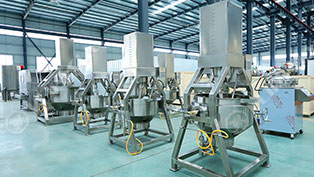
A jacketed kettle is a versatile piece of equipment widely used in the food processing, catering, and beverage industries. It is ideal for preparing soups, sauces, jams, confectionery, and other liquid or semi-liquid products. The unique design of the jacketed kettle allows for even heating, efficient cooking, and safe operation. To better understand how it functions, let’s break down its working principle.
Structure of a Jacketed Kettle
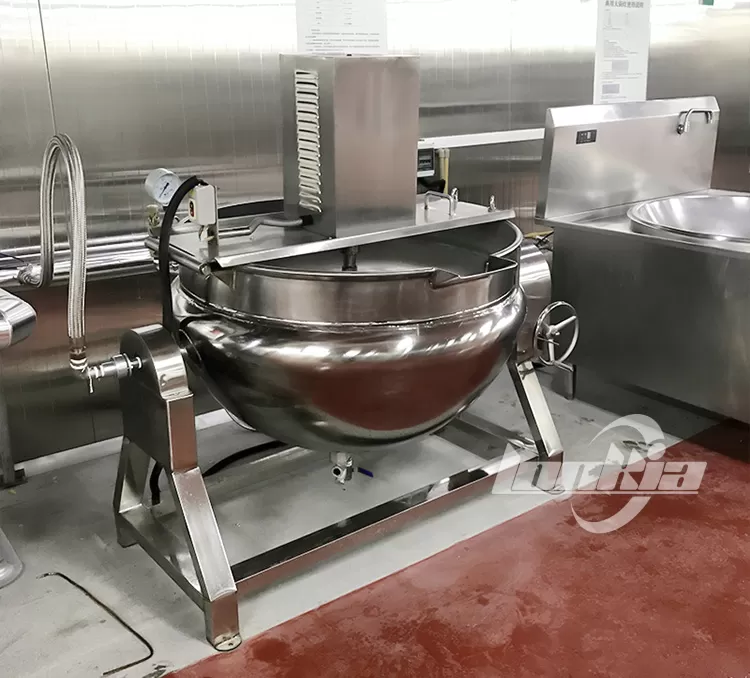
A jacketed kettle consists of three main parts:
Inner Vessel (Cooking Pot): Holds the food ingredients to be cooked.
Jacket Layer: Surrounds the inner vessel and serves as the heating medium chamber.
Support Frame and Accessories: Includes the stand, tilting mechanism, agitator (optional), valves, and safety devices.
Heating Mechanism
The jacketed kettle works by applying heat indirectly through the jacket layer. Depending on the design, the heating medium can be steam, hot water, thermal oil, or electricity. This indirect heating ensures uniform temperature distribution, reduces the risk of burning, and maintains food quality.
Steam Heating: Steam enters the jacket, condenses, and transfers heat to the inner vessel, providing rapid and consistent cooking.
Electric Heating: Electric elements embedded in the jacket heat the medium (oil or water), which then transfers heat evenly to the food.
Working Principle
Heat Transfer: The heating medium in the jacket generates consistent heat around the inner pot.
Uniform Cooking: Indirect heating minimizes hot spots, ensuring even cooking and preventing scorching.
Temperature Control: Operators can regulate heat by adjusting steam pressure, electrical power, or thermostatic controls.
Tilting and Discharge: Many models feature a tilting mechanism that allows safe and efficient discharge of cooked products.
Advantages of Jacketed Kettles
Even Heat Distribution: Prevents localized overheating and ensures product consistency.
Energy Efficiency: Retains heat effectively, reducing energy waste.
Versatility: Suitable for cooking, mixing, heating, and holding various food products.
Safety: Indirect heating reduces burn risks compared to direct flame cooking.
Final Thought
The jacketed kettle’s working principle combines indirect heating, uniform heat transfer, and safety features, making it an essential tool for commercial kitchens and food processing industries. Understanding how it works helps operators use it more effectively, ensuring higher productivity and consistent food quality.